

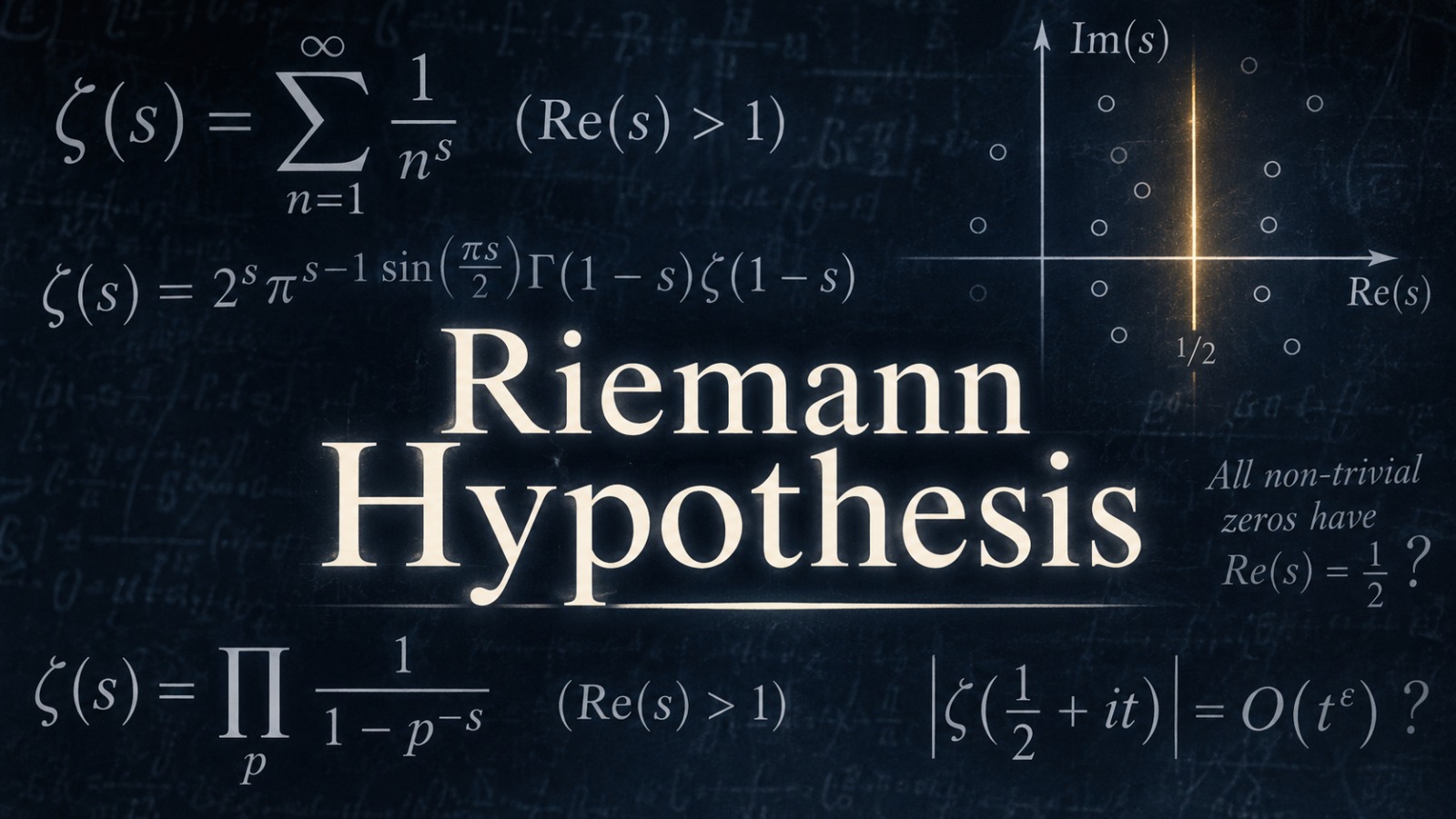
I haven’t seen people talk about this at all, so thought I’d share this article about it. For those depressed that no one will actually understand the RH Proof: we have another, entirely human proof which means there are humans who understand it. It might have been overshadowed, but assuming it ends up working out (I have heard there have been some problems found, hopefully they are surmountable) then I think it will be the far more impactful result.
I’m not sure I do trust Lean though. The tools I work with are getting patched for odd edge cases every day. Am I expected to suspend all disbelief and assume that there’s nothing dodgy in the 17M lines of unreadable puke that make up this proof? How confident are we that an agent wouldn’t exploit a bug in Lean to achieve its goals?
The thing is, the AI wouldn’t have to just exploit a bug in Lean.
It would have to have exploited a bug that somehow exists in multiple completely independent implementations of Lean and Lean type checkers. Either that, or the fundamental basis of formal mathematics (ZFC + universes) is wrong and if that’s true, that’s an even bigger discovery.
The Lean Prover Zulip chat is publicly accessible. You can go observe the world’s leading experts on formal mathematics work through it. They are 100% certain the proof is valid. They have moved on to reducing and simplifying the proof because it is real. They’ve even got a “why should I trust Lean?” thread open for all the tourists who have been dropping in to ask these very questions.
One part of the verification is that the proof is checked by multiple independent implementations of LEAN. A bug in the software would have to be one that has to be present in all of them to not be caught. There absolutely have been bugs before that were caught this way. But this time they seem to agree.
Calling it 17 million lines of unreadable puke is also not justified. There is a structure to it and part of the reason why it’s so much is that the AI was not allowed to introduce assumptions and went into incredible detail to prove every last little thing that went into the proof. When people make fun of things like it containing a separate proof for real numbers that are not 1/2 to be either less or greater than 1/2, realize that the alternative where the AI is allowed to just write this sort of thing down as an obvious truth like a human would means there is a list of such assumptions that have to be verified individually. So this is not a sign of slop but a tactic to make the proof easier to verify.
LLMs don’t “make assumptions”, they’re text generators, the reason it spat out 17 million lines of Lean code is because it was a brute forced random walk of the problem space.
That a human could do in 980 pages what a LLM took 250,000 pages to do, is not proof that the chatbot “went into more detail”.
Assumptions in the mathematical sense. Not talking about how LLMs operate but how the proof is structured.
The human with 980 pages has entire sections missing and errors in others. We don’t know how many more pages are needed, but we do know every single one has to be verified manually because unlike the AI he does not have anything that can be checked by a machine.
Any mathematical proof relies on the theorems and axioms that it assumes are correct. Mathematicians have proven that a proof that is formalized correctly in Lean is correct. It’s just one of the “If A then B” paths in Mathematics today. I think its a lot more likely that human mathematicians verifying Vakil’s proof would make a mistake. Although I would certainly consider Vakil’s human-readable proof far more valuable.
If there’s no bug in Lean it doesn’t matter how bad the slop is, as long as it checks out. Big if, though