

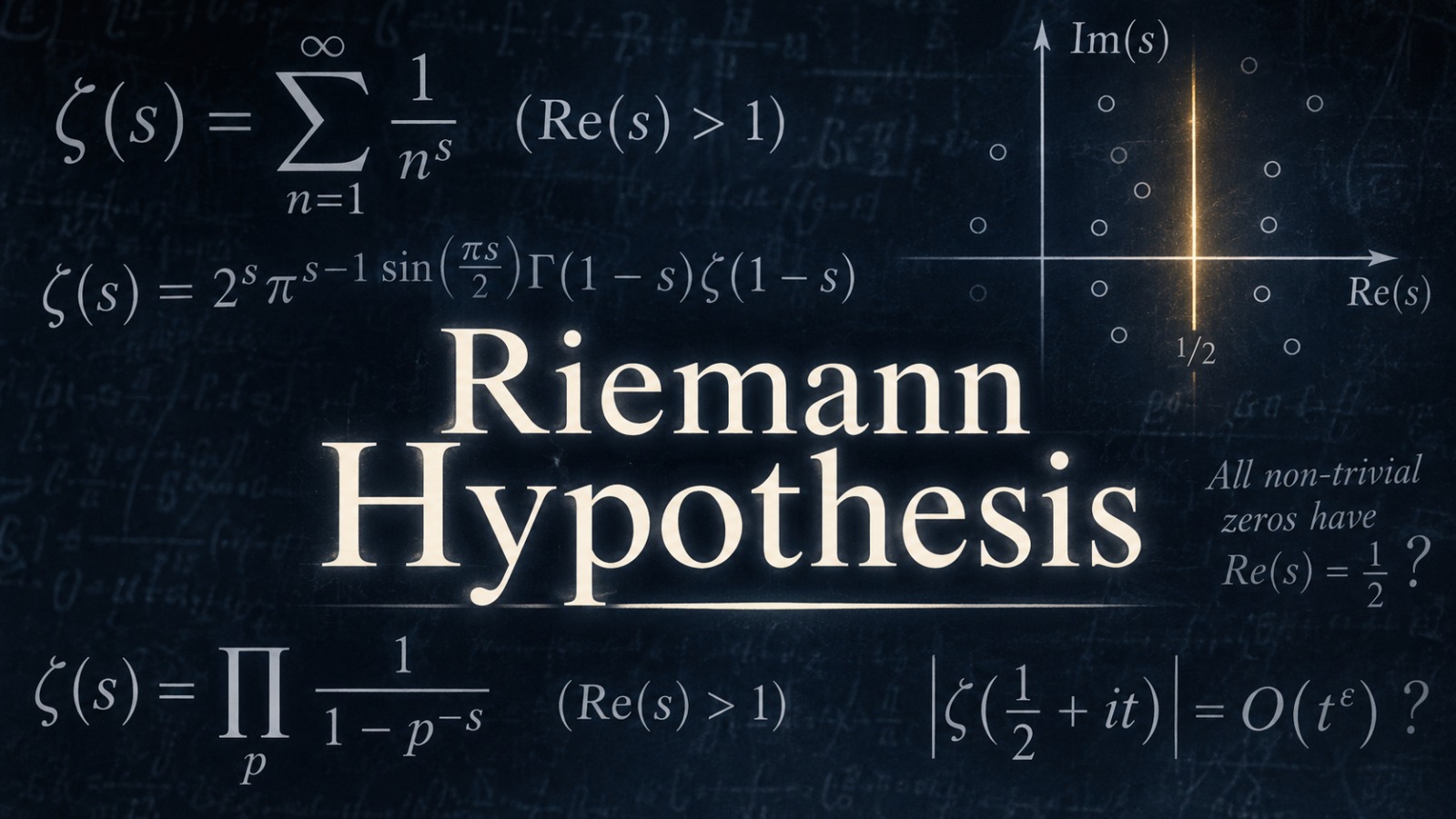
I haven’t seen people talk about this at all, so thought I’d share this article about it. For those depressed that no one will actually understand the RH Proof: we have another, entirely human proof which means there are humans who understand it. It might have been overshadowed, but assuming it ends up working out (I have heard there have been some problems found, hopefully they are surmountable) then I think it will be the far more impactful result.
A Lean proof is relatively easy to mechanically verify and this has been done independently already by several groups using different Lean kernels to preempt the possibility of a Lean bug. For this particular question, the existence of a proof itself is remarkable in its own right. If Masullo’s proof can be verified, it would be an even bigger deal because it can more readily translate into human digestible techniques, but until/unless it is fleshed out and accepted, it’s far less interesting. A lot of work on the Riemann Hypothesis has been done for decades, it wouldn’t be close to the first incorrect proof produced by legitimate experts.
A question I have that I don’t think I’ve seen answered anywhere. We know that the Lean project does compile and validate, across several Lean kernels. But do we know if that Lean project actually is a proof for the Riemann Hypothesis? Or could it just be validating something (even marginally) unrelated.
Let’s say I created a Lean project that verified if 1 == 1, but the actual lean code was so incomprehensibly large that no-one could understand what it was verifying, just that it did verify eventually, and said that was my Riemann Hypothesis proof. Would anyone have anything other than my word on that?
Yes, the proof is literally in the pudding.
The whole point of Lean is the strict type-checking. In effect, the proof says “this is the Riemann Hypothesis, and this is the proof” and you can be 100% certain that the proof is valid.
100 million tons of pudding; yep the proof is in there somewhere, get digging.
BTW, the proof looks exactly like pudding, good luck.
Yeah, and?
It’s still a valid proof.
Yes that’s one of the criteria that were verified by humans. In the case of the Riemann hypothesis it’s not that difficult because it’s not that complex (only proving it is difficult, spelling it out isn’t), and there was an existing human curated formalization of it too.
You can read more about it here: https://leanprover-community.github.io/blog/posts/riemann-hypothesis/
What does it take to validate Masullo’s proof though? My understanding is that it has to be examined by other experts and manually verified using existing expertise, but couldn’t it also be written in Lean as well and validated that way too?
In any case, maybe the culture around proving things in mathematics does need to change. If people doing hard research for years get sniped by people messing around with models, then maybe they need to publish more incremental progress instead of only releasing it when it’s done and thoroughly polished…
Years of time and effort from specialists. Turning it into a Lean program would help a lot but that’s not a trivial effort, it’d still take considerable time.
The culture around mathematical research is changing but not the way you’d like. Mathematicians are being more secretive about their research so that it doesn’t get sniped by a guy with a Claude subscription and published in a half-baked low quality format just to say “I did it first.”
I would not be surprised if someone got an AI to fill in the missing bits and fix the errors by making it do exactly that. Assuming the author really was on to something of course. It wouldn’t be the first human attempt to prove it that turned out to be wrong.