

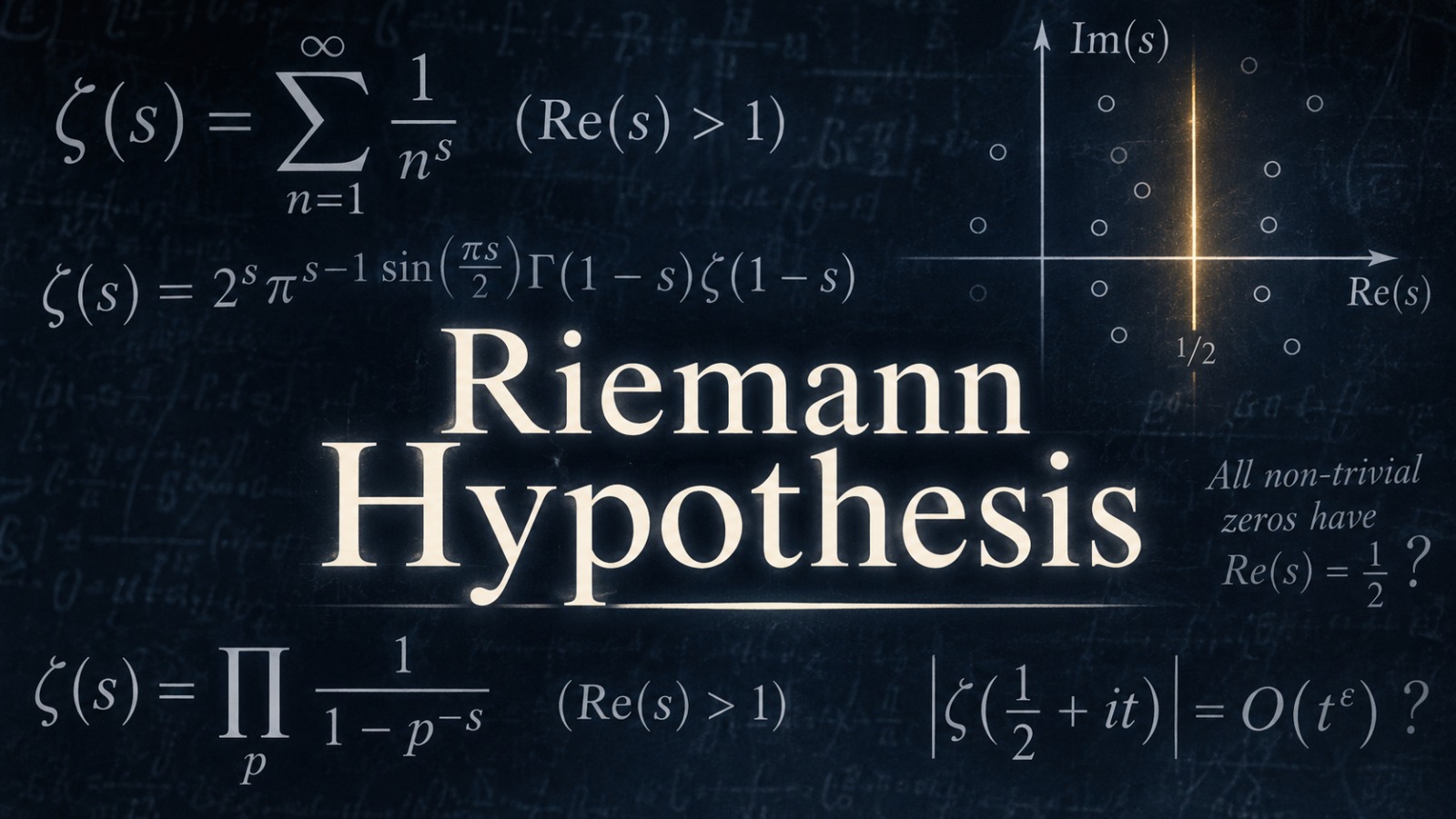
I haven’t seen people talk about this at all, so thought I’d share this article about it. For those depressed that no one will actually understand the RH Proof: we have another, entirely human proof which means there are humans who understand it. It might have been overshadowed, but assuming it ends up working out (I have heard there have been some problems found, hopefully they are surmountable) then I think it will be the far more impactful result.
I hate this AI trend, and that a proof of a theorem is now reduced to check wether a >200k LOC program compiles is disgusting, but that a top mathematician can direct a swarm of bots to solve the holy grail of mathematics in ~2 months is incredibly news-worthy. This is moving the ground of the academic world, a lot.
I agree, but then the novelty is the capability of these statistical models. The feat on its own is not what’s novel about it.
Or to put it another way, maybe it takes some level of expertise to solve problems like this with a statistical model. Maybe even I could pull something like this off if I worked on it for a few years with infinite search tokens. But it takes a completely different level of expertise to solve it manually the way a human would. There’s a lot of people who could do it with a search algorithm - there are maybe 100 or so people in the world that could do it without one of them.
But at the end of all of this, code is still just code, whether it’s C, C++, Java, or Lean. They pretty much all work the same way. I will admit that the 2 month timeframe is impressive, but we’ve already known for a couples years by now thatLLMs can brute force their way to a solution if you give them a problem statement and an acceptance criterion…
What techniques like this can be used for in the future does sound quite incredible though.