

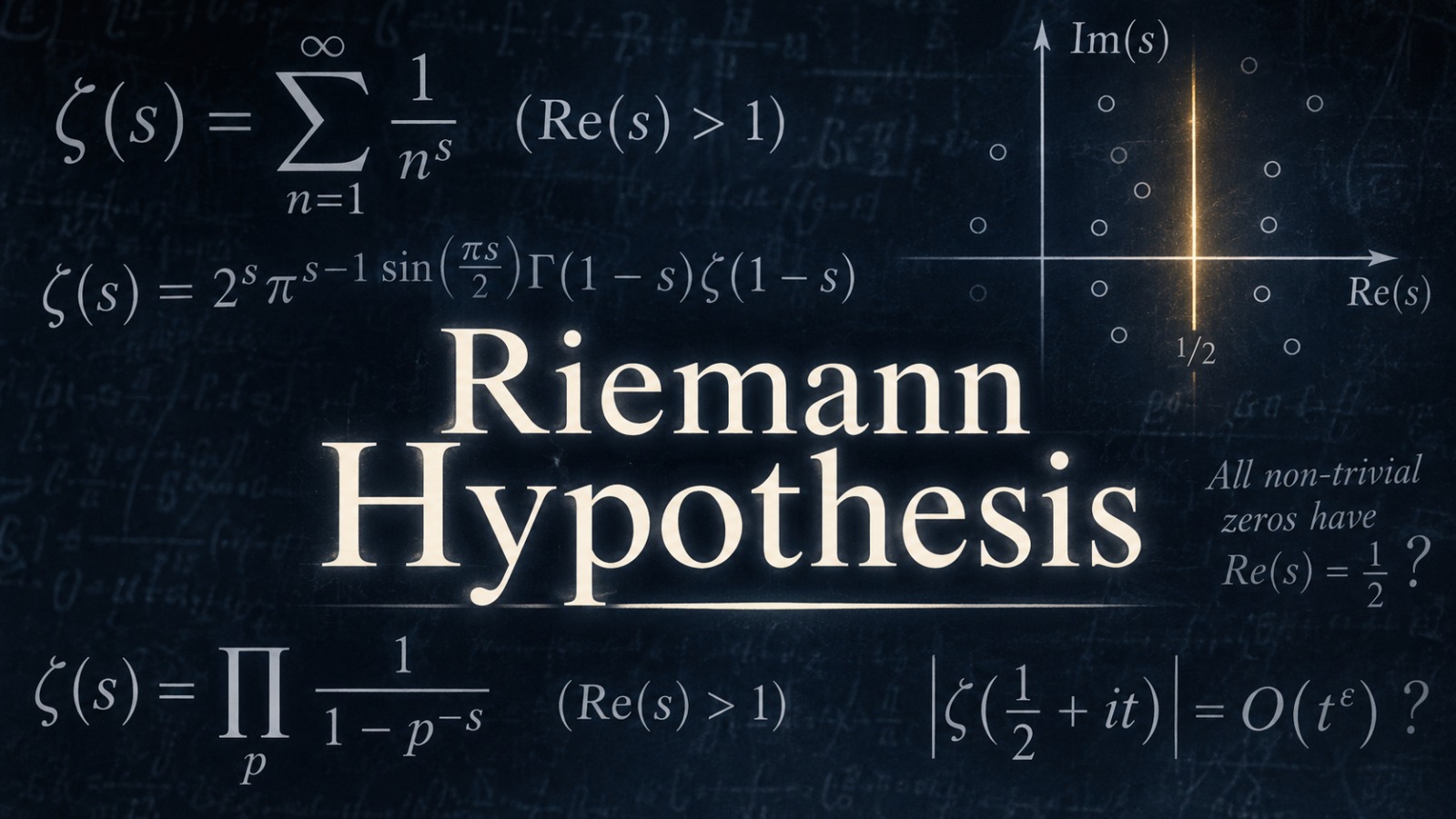
I haven’t seen people talk about this at all, so thought I’d share this article about it. For those depressed that no one will actually understand the RH Proof: we have another, entirely human proof which means there are humans who understand it. It might have been overshadowed, but assuming it ends up working out (I have heard there have been some problems found, hopefully they are surmountable) then I think it will be the far more impactful result.
Okay, so you’re just sealioning at this point. The standard of certainty that’s been met here is already vastly higher than what a traditional, hand-written proof undergoes.
If you want, I linked the formalized statement (pointing this out because you have a hard time following and reading links), which you can go scrutinize yourself or refer to any number of mathematicians if you suspect something’s wrong with it.
In reality, you have no understanding how any of this works and don’t care to even try to find out, so instead you’re pissing out a stream of vague, flimsy objections like a Dollar Tree Socrates.
Dunning Kruger strikes again. Go shout at the clouds around Cambridge University.
The abstract of the paper that video links to reads:
If you think this statement of the Riemann Hypothesis was not only machine-translated into Lean (it wasn’t) but that it somehow contained a mistake that nobody caught because of that fictional machine translation, then Dunning–Kruger didn’t just strike – it dropped you on your head repeatedly as a child. Or more likely, you didn’t read a word of that article to begin with, and you’re still just throwing flimsy bullshit at the wall because you don’t actually care to try to know what you’re talking about.
Because, again, you’re chronically terrible and lazy at actually investigating sources, here’s what that formal statement of the Riemann Hypothesis looks like:
Can you personally guarantee, after checking all 250,000 pages of underlying AI-generated text, that Claude powered Autoformalisation didn’t mistranslate an imported result?
No. You can’t.